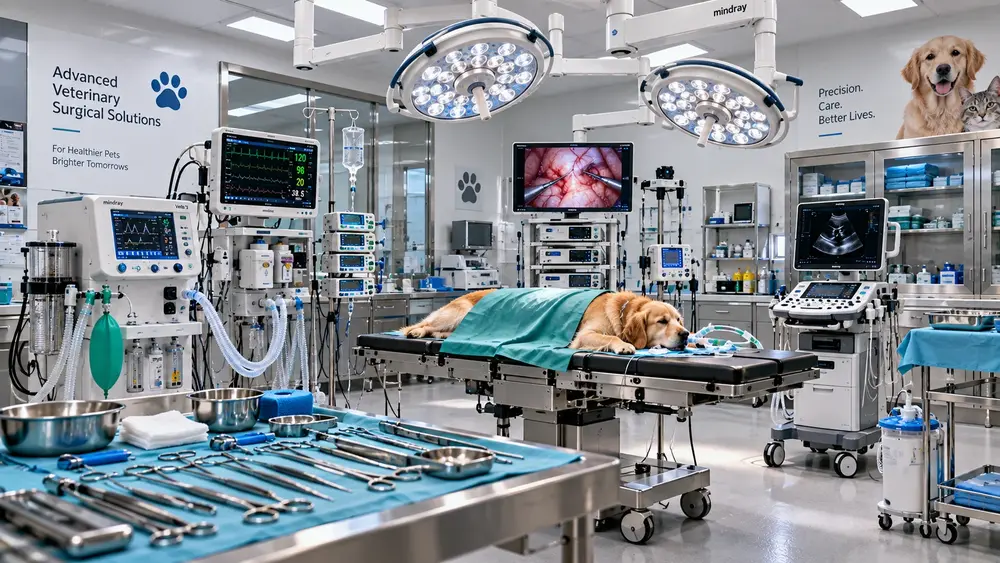
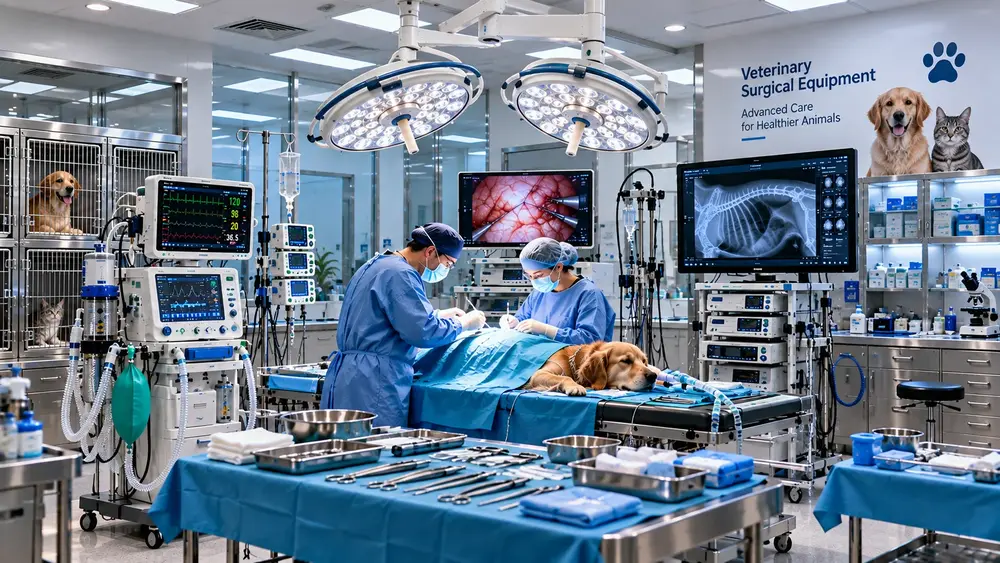
Surgery on an animal patient carries the same demands for precision and safety as human surgery, but with an added layer of complexity: every species, and often every breed and size, needs equipment adjusted to fit. Finding the rightVeterinary Surgical Equipment Supplier is one of the most important decisions a veterinary clinic or hospital will make, since surgical outcomes depend directly on having reliable, properly sized instruments, anesthesia systems, and monitoring equipment in the operating room.
Why Veterinary Surgical Equipment Is a Different Category
Operating on a small cat and operating on a horse are not variations of the same procedure — they require entirely different equipment scaled to the patient. Anesthesia dosing and delivery, surgical table sizing, and even instrument weight and grip all need to be matched to the animal in front of the surgeon. A veterinary surgical equipment supplier who understands these differences, rather than repurposing human surgical stock, gives a clinic a genuine advantage in the operating room.
Core Categories to Evaluate
Clinics building or upgrading a surgical suite should look closely at a supplier’s range across a few essential categories.
Anesthesia and Monitoring Systems
Veterinary anesthesia machines need to deliver precise, species-appropriate dosing, since even small dosing errors can be dangerous for smaller animals. Pairing anesthesia delivery with reliable vital-sign monitoring lets the surgical team catch any change in the patient’s condition immediately during a procedure.
Surgical Tables and Instruments
Adjustable surgical tables that accommodate a wide range of animal sizes, along with instrument sets designed for veterinary procedures rather than adapted human tools, make a measurable difference in how smoothly a surgery runs and how quickly a patient recovers.
Sterilization and Infection Control Equipment
Autoclaves and sterilization systems sized appropriately for a veterinary practice’s caseload are essential for preventing surgical site infections, which can be just as serious in animal patients as in human ones.
Equipment for Equine and Large Animal Surgery
Equine and livestock surgery introduces additional equipment needs, including hoists and slings for safely positioning large animals, heavy-duty surgical tables, and anesthesia systems capable of dosing much larger body weights accurately. A veterinary surgical equipment supplier serving this segment needs a genuinely different product range than one focused purely on companion animal clinics.
Technical Support Matters as Much as the Equipment
Surgical complications do not wait for convenient business hours. Clinics should ask any prospective supplier how quickly they can respond if equipment fails mid-procedure, whether loaner equipment is available during repairs, and how experienced their technical team is with veterinary-specific systems rather than general medical equipment.
Training for Surgical and Support Staff
New surgical equipment is only as safe as the team using it. A good supplier provides hands-on training for veterinary surgeons, technicians, and support staff on correct setup, use, and basic troubleshooting, rather than leaving a clinic to learn by trial and error during an actual procedure.
Refresher training after a new model replaces an older one is just as important as the initial session, since even experienced staff can develop blind spots around features that differ from equipment they have used for years.
Planning Purchases Around Case Volume
Clinics performing occasional routine procedures have very different equipment needs than referral hospitals running a full surgical caseload every day. Matching equipment specification and quantity to realistic case volume helps clinics avoid overspending on capability they will rarely use, while still being properly equipped for the procedures they perform regularly.
Warranty and Total Cost of Ownership
Purchase price tells only part of the story with surgical equipment. Clinics should ask any prospective veterinary surgical equipment supplier about warranty coverage, whether loaner units are provided during repairs, and what routine servicing and calibration cost over the equipment’s working life. A slightly higher upfront price backed by strong local support and a genuine warranty often proves cheaper over several years than a discounted system with weak after-sales service.
Financing or phased payment options, where available, can also make higher-specification surgical equipment accessible to smaller clinics that would otherwise have to compromise on quality to stay within budget.
Paramount UAE: Your Partner in Veterinary Surgical Equipment Supplier
Paramount UAE supplies veterinary clinics and hospitals across the UAE with anesthesia systems, surgical tables, instrument sets, and sterilization equipment suited to companion animal, equine, and livestock surgery. Their team supports installation, staff training on species-specific surgical equipment, and responsive technical service when it matters most.
Conclusion
Choosing the right Veterinary Surgical Equipment Supplier has a direct impact on surgical outcomes, patient safety, and how confidently a veterinary team can take on new procedures. By prioritizing species-appropriate equipment, responsive technical support, and proper staff training, UAE veterinary practices can build a surgical program they can rely on for years to come. Paramount UAE continues to support that growth across the region.